Crafting Immersive Audio Experiences: The Development of Layered Language Tracks in Global Action Cinema Releases

Action cinema has long relied on synchronized sound design to heighten tension and drive narrative momentum, yet the push toward layered language tracks represents a distinct evolution in how studios prepare films for worldwide audiences. These tracks allow multiple language versions to coexist within a single release package, enabling viewers to switch between original performances and localized dubs without compromising the core audio mix. Data from industry reports indicate that major studios now allocate substantial portions of post-production budgets to this process, reflecting the commercial necessity of reaching non-English markets efficiently.
Historical Shifts in Audio Localization
Early action films often received separate mono or stereo dubs created after the original mix, which frequently resulted in mismatched sound effects and music levels across versions. Observers note that by the late 1990s, digital workflows began to change this pattern, as studios started preserving discrete dialogue stems that could be replaced while retaining the original effects and music beds. This approach gained traction with the rise of DVD and Blu-ray formats, where space constraints no longer limited the number of audio tracks that could travel with a title. Researchers at film technology conferences have documented how action sequences, with their heavy reliance on directional sound and low-frequency effects, required particularly careful stem management to avoid phase issues when dialogue layers changed.
Technical Workflows Behind Layered Tracks
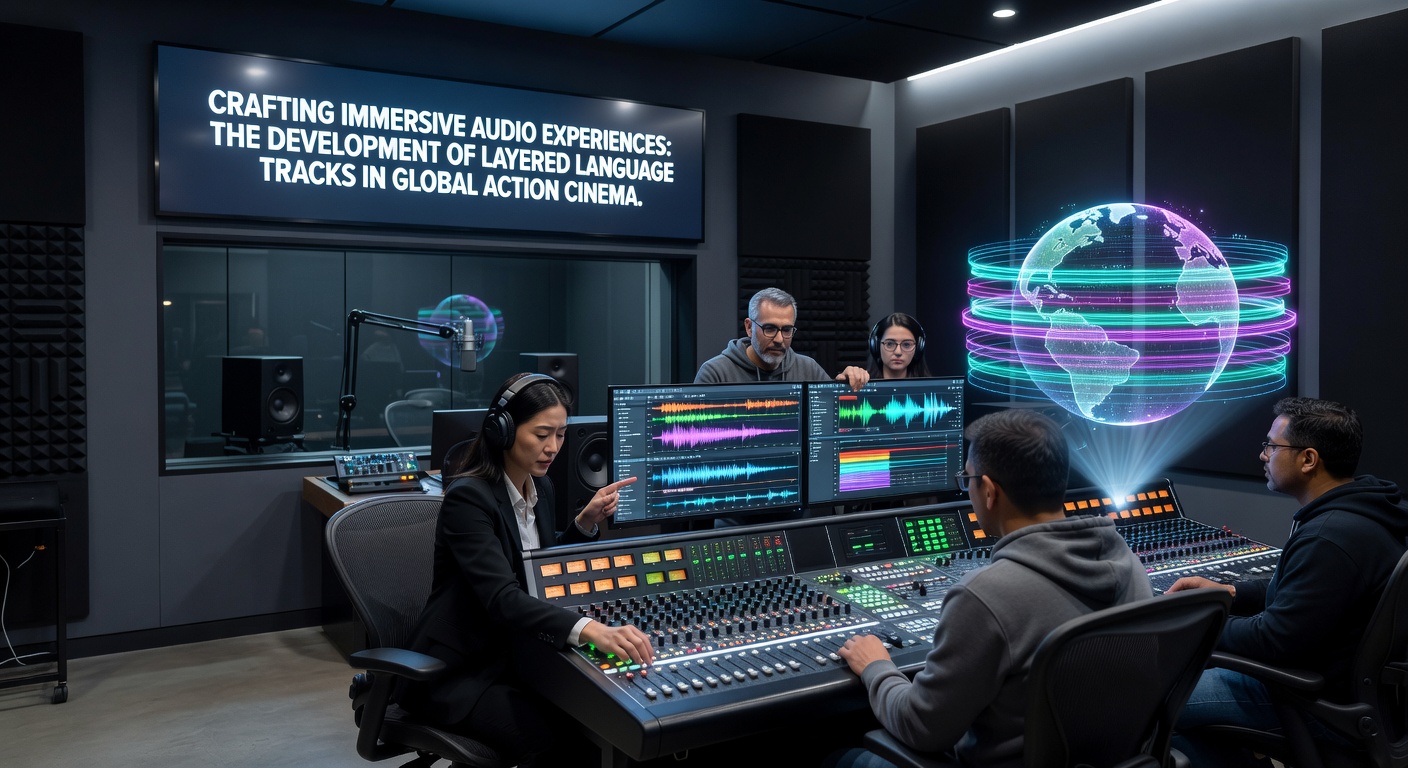
Modern pipelines begin with dialogue isolation during the original recording stage, where ADR sessions capture clean vocal performances in multiple languages from the outset whenever possible. Sound editors then build parallel dialogue stems that align frame-accurately with the locked picture, while the music and effects stems remain common across all versions. In June 2026 several major action franchises adopted updated delivery specifications that mandate at least six simultaneous language layers encoded in Dolby Atmos format, allowing height and overhead channels to stay consistent regardless of which dialogue track plays. Automated tools now assist with timing adjustments and lip-sync refinement, although human mixers still perform final quality checks to preserve emotional nuance in high-stakes scenes. According to technical papers presented at recent SMPTE events, these layered masters reduce turnaround time for international versions by approximately forty percent compared with traditional full remixing methods.
Regional Adaptations and Market Demands
European distributors have driven much of the demand for expanded language options, particularly in territories where audiences expect both subtitled originals and full dubs. An analysis by the European Audiovisual Observatory shows that action titles with five or more language tracks achieve measurably higher ancillary revenue on streaming platforms than single-language releases. In contrast, Asian markets often prioritize original-language tracks with localized subtitles, yet still require secondary dubs for theatrical runs in smaller cities. Canadian production incentives have encouraged bilingual French-English stems to be prepared simultaneously during principal photography, shortening the path to domestic release in both official languages. These geographic variations illustrate how layered track development must accommodate differing exhibition priorities without inflating overall production costs.
Challenges in Maintaining Immersion
Action sequences present unique difficulties because gunfire, vehicle engines, and impacts occupy broad frequency ranges that can mask or conflict with dialogue replacement. Engineers therefore employ dynamic range compression tailored to each language stem, ensuring that whispered lines remain intelligible while preserving the impact of explosions. Phase alignment between stems becomes critical when viewers switch languages mid-scene, and automated tools now flag potential dropouts before final mastering. Studies conducted at the University of Southern California’s audio research lab have quantified how even minor timing offsets in layered tracks can reduce perceived spatial coherence in surround and immersive formats, prompting studios to invest in more precise synchronization software. Despite these advances, some directors continue to request separate full mixes for key markets when creative control over tonal balance remains a priority.
Future Directions in Multi-Language Audio
Emerging object-based audio standards offer the possibility of treating individual dialogue lines as movable objects within a three-dimensional sound field, which could further decouple language choices from the underlying effects bed. Early tests conducted by Japanese and Australian post-production houses suggest that such flexibility may reduce the need for entirely separate stems, although bandwidth requirements for consumer delivery remain a limiting factor. Regulatory frameworks in several territories now encourage accessibility features such as audio description to be integrated as additional layers rather than standalone tracks, streamlining distribution while meeting legal obligations. These developments indicate that layered language systems will continue to evolve in tandem with both technological capabilities and audience expectations for personalized viewing experiences.
Conclusion
The refinement of layered language tracks has become an integral component of global action cinema distribution, balancing technical precision with commercial reach. As delivery formats and audience preferences shift, the processes developed for these audio layers will likely influence broader post-production practices across genres and regions. Continued collaboration between engineers, linguists, and distributors remains essential for maintaining narrative impact while serving diverse markets.