The Art of Layering Localized Soundtracks During Export Prep for Worldwide Action Cinema Releases
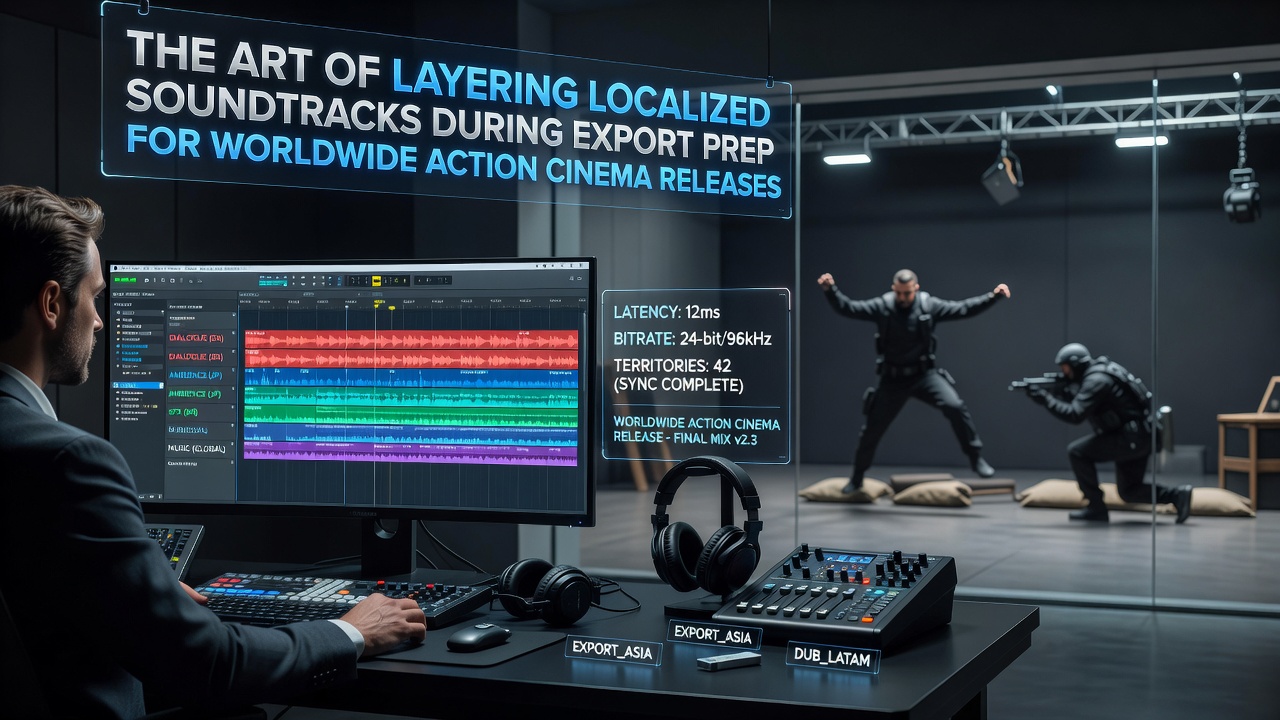
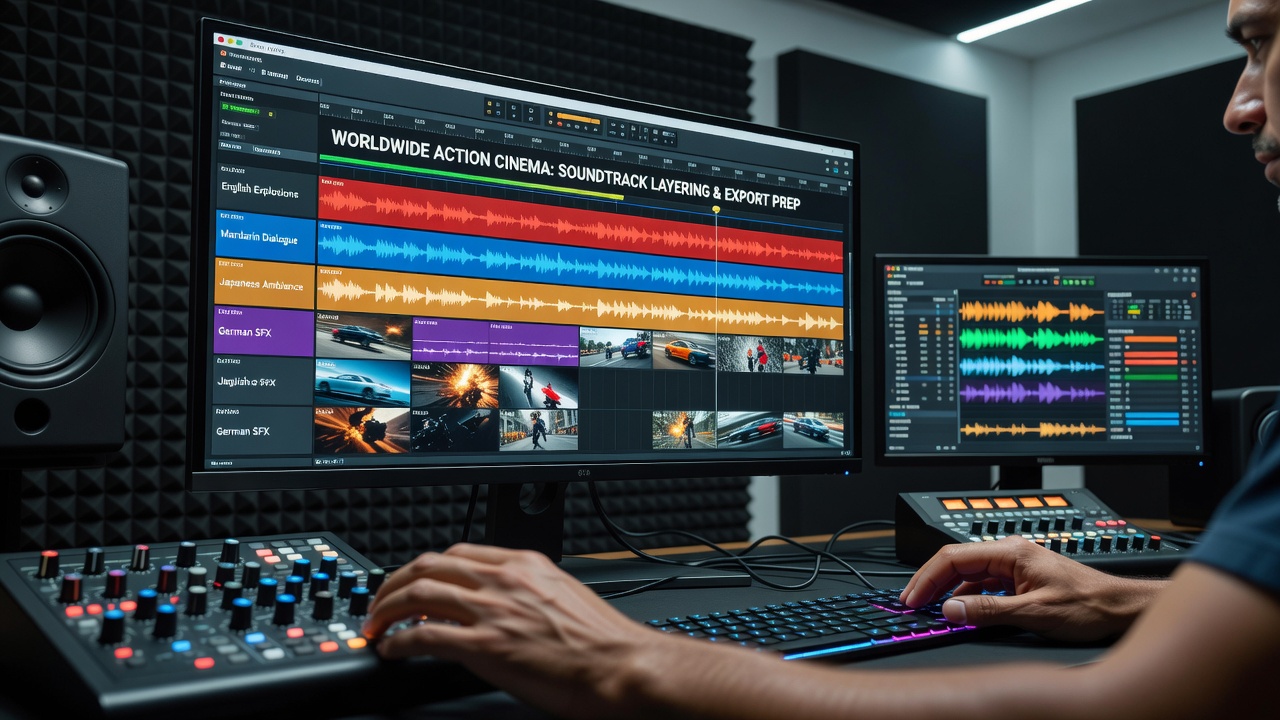
Action cinema exports require precise coordination of audio elements to accommodate diverse language markets, and the process begins with separating core sound components into distinct tracks that allow for targeted replacements without disrupting the original mix. Studios isolate dialogue, sound effects, and music stems early in post-production so that localized voice performances can integrate cleanly while preserving ambient layers and score elements that travel across borders.
Core Components of Audio Layering
Engineers divide the soundtrack into dialogue, effects, and music stems because this separation enables region-specific dialogue recordings to replace original lines while effects and music remain consistent. Data from industry reports indicates that action sequences often feature dense sound design, so maintaining phase alignment between stems prevents timing shifts when new dialogue tracks layer in during export prep. Observers note that synchronization protocols rely on timecode standards established by organizations such as the Society of Motion Picture and Television Engineers, which ensures every frame aligns across versions prepared for different territories.
Localization teams record new dialogue performances in controlled environments that match the original actor's pacing and emotional intensity, then editors adjust timing and pitch to fit existing mouth movements. Those who've studied this workflow find that automated tools assist with initial alignment, yet human review remains essential because action scenes contain rapid cuts where even minor offsets become noticeable. Research from academic film studies programs shows that consistent stem separation reduces artifacts during the final mixdown phase.
Export Preparation Workflows in June 2026
By June 2026, studios handling worldwide releases had adopted cloud-based collaboration platforms that allow simultaneous work on multiple language versions, and these systems track version control across stems to avoid conflicts when teams in different time zones update tracks. The process incorporates metadata tagging for each stem so that export software automatically routes the correct language dialogue to the appropriate delivery package. Figures from trade publications reveal that action films destined for multiple territories undergo at least five separate audio passes before final approval.
Engineers verify loudness compliance according to regional broadcast standards during these passes, and they adjust dynamic range compression on effects stems to suit varying cinema playback systems. While dialogue layers receive primary focus, music stems sometimes undergo minor EQ adjustments for cultural preferences without altering the composer's intent. One production house documented that this layered approach shortened turnaround times for simultaneous global releases compared to earlier sequential methods.
Synchronization and Quality Control Measures
Synchronization begins with embedding reference timecode into every stem, and technicians cross-check alignment at key action beats such as explosions or fight impacts where audio-visual sync proves most critical. Automated comparison software flags discrepancies, after which mixers fine-tune offsets manually. Studies conducted at media technology institutes demonstrate that phase coherence between original and localized stems improves when engineers apply consistent sample rate conversion throughout the pipeline.
Quality control teams listen to complete mixes on calibrated monitoring systems that replicate theatrical playback conditions, and they perform spot checks in multiple languages to confirm clarity of replaced dialogue. External partners such as the European Audiovisual Observatory have published guidelines on audio localization that studios reference when preparing packages for European markets. These checks also extend to subtitle timing because some territories combine dubbed audio with on-screen text.
Regional Adaptations and Delivery Formats
Export teams prepare delivery packages that include multiple audio configurations to support theatrical, streaming, and physical media formats, and each configuration carries region-specific language tracks plus a master international version. In markets where audiences prefer original language with subtitles, the localized dialogue stem may remain unused while effects and music layers stay intact. Observers note that this modular structure allows distributors to assemble final versions quickly based on local exhibition requirements.
Action sequences benefit particularly from this flexibility because intense fight choreography and vehicle stunts rely on precise effects placement that should not shift when dialogue changes. Data collected by university research centers tracking global film distribution shows that layered audio preparation correlates with higher viewer retention rates across language markets when compared to single-mix exports.
Conclusion
The preparation of layered localized soundtracks for action cinema exports involves systematic stem separation, precise synchronization, and rigorous quality verification that together enable simultaneous worldwide releases. Studios continue to refine these techniques as delivery platforms evolve, yet the fundamental requirement for clean integration of new dialogue remains unchanged. This structured approach supports both creative consistency and logistical efficiency across international markets.